
Athangudi Tiles vs. Vitrified Matt Finish Tiles: A Complete Guide for Architects, Designers, and Homeowners
Selecting a flooring material is more than just checking off appearance and price. Athangudi tiles and vitrified matt finish tiles are two different ways of flooring. Athangudi tiles are handmade with traditional patterns and regional identity, while vitrified tiles have a matt finish, are produced under controlled conditions, and have uniform dimensions with a wide range of contemporary surfaces. Knowing these differences enables architects, interior designers, builders, and homeowners to choose flooring to meet design intent, application, maintenance, and technical needs.
1. What are Athangudi tiles?
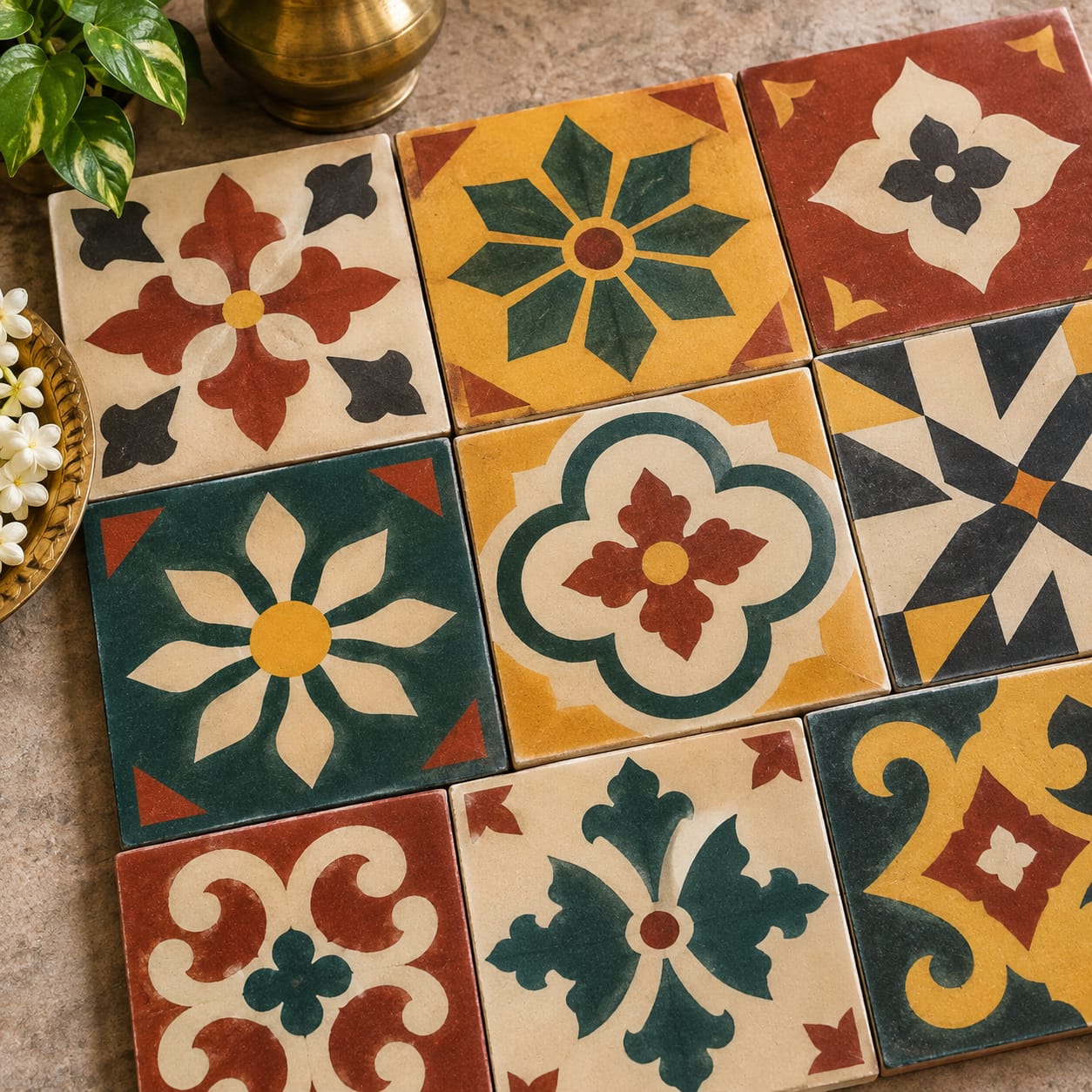
Athangudi tiles are traditional hand-made cement tiles and belong to the Athangudi area of Chettinad, Tamil Nadu. The artisans create these tiles from cement, sand, pigments, and molds to produce unique geometric and decorative patterns. Each tile is made by hand, and therefore the finished floor has its own individual variations of color, pattern, and surface. The handmade quality of Athangudi tiles makes them relevant for heritage homes, traditional interiors, boutique hospitality spaces, and projects where craftsmanship is an integral part of the design.
2. What are vitrified tiles with a matt finish?
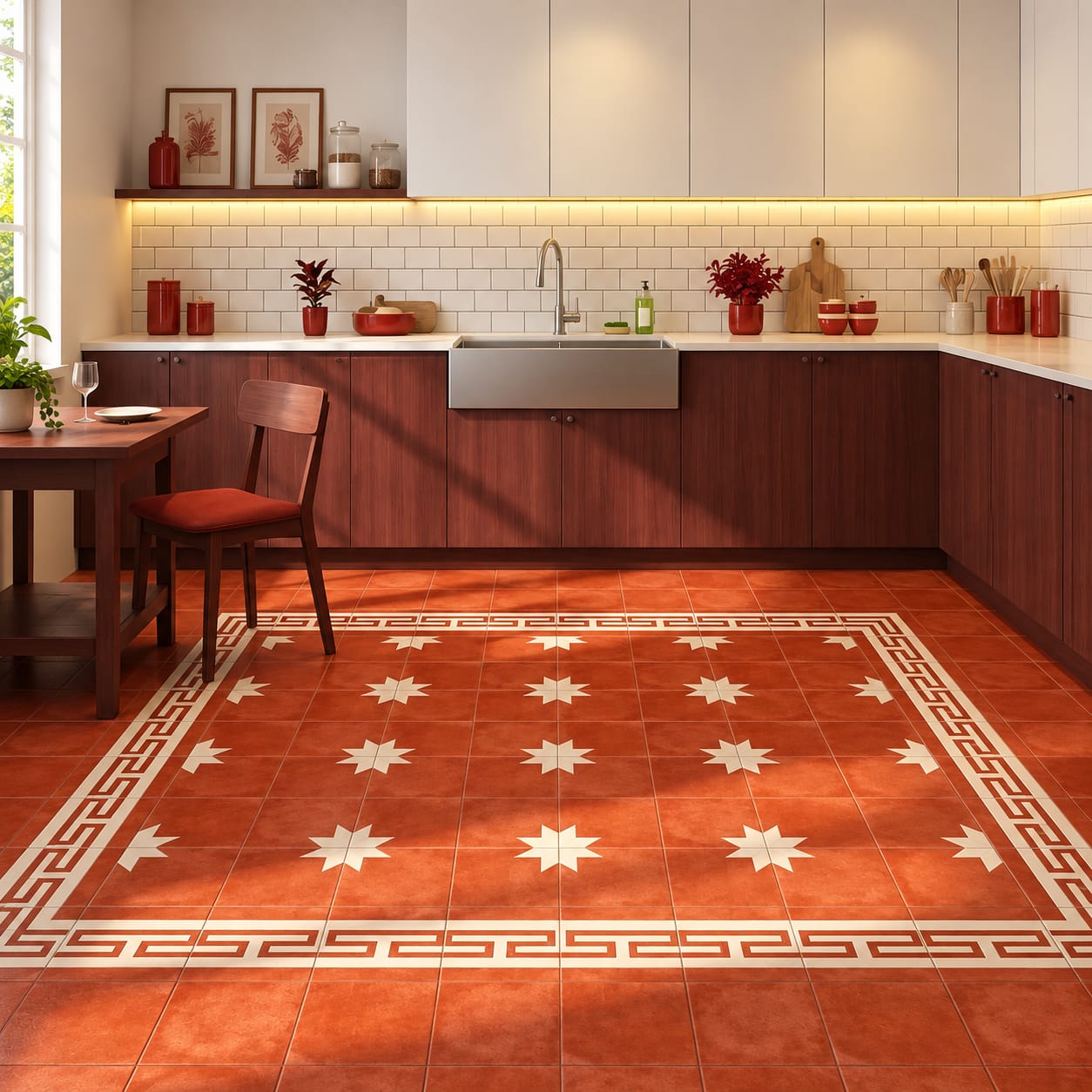
Vitrified matt finish tiles are factory-made tiles, manufactured by a controlled industrial process. Vitrification produces a dense tile body with low water absorption, and the matt finish provides a non-glossy look, suitable for contemporary interiors. Depending on the product, vitrified tiles come in different sizes, colors, textures, patterns, and surface finishes. Check the technical properties like water absorption, breaking strength, abrasion resistance, stain resistance, and chemical resistance against the specifications of the individual product.
3. Athangudi Tiles vs Vitrified Matt Finish Tiles: The Basic Difference
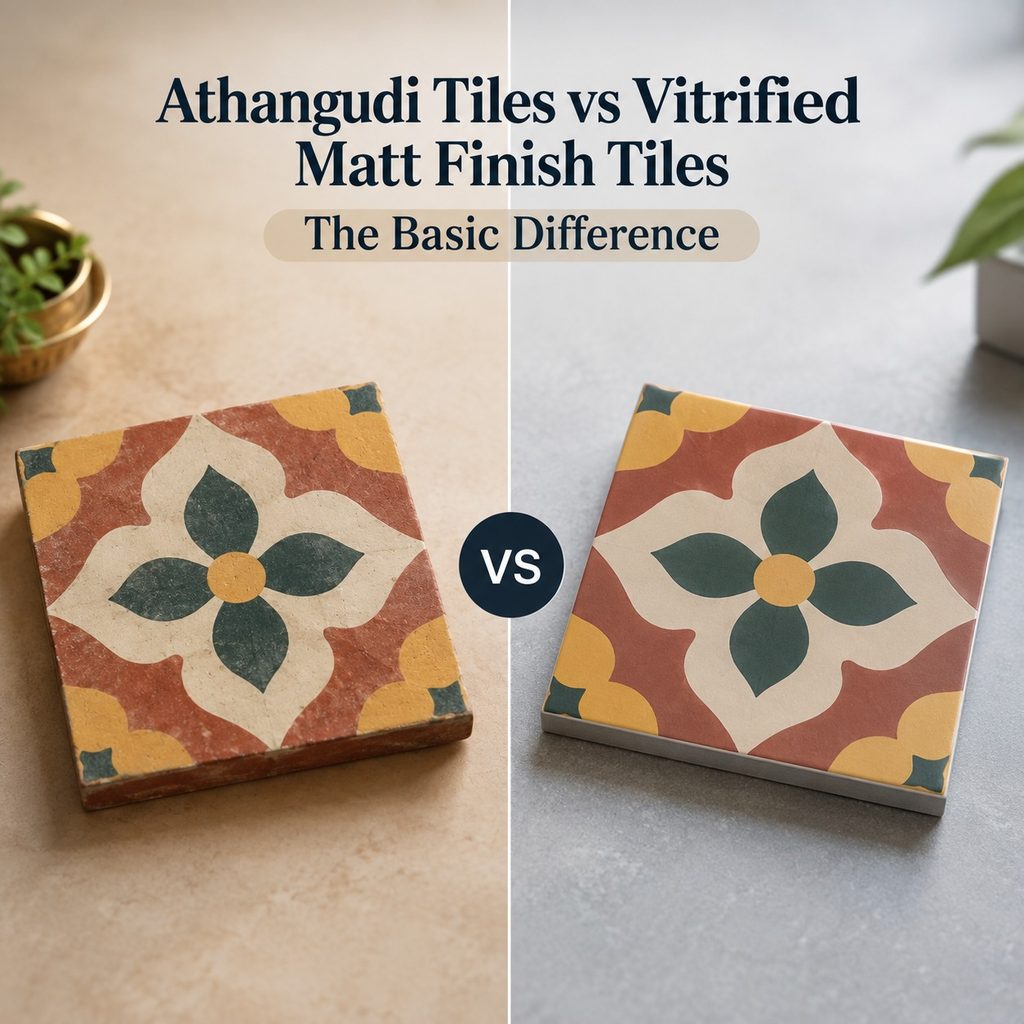
The difference between Athangudi tiles and vitrified matt finish tiles mainly lies in the manufacturing process and design philosophy. Athangudi tiles are made by traditional artisans by hand and will naturally vary from tile to tile. Vitrified matt finish tiles are manufactured by controlled processes to achieve greater consistency in dimension, surface appearance, and production quality. So for professionals the decision should start with the design language and technical requirements of the project and not the assumption that one material is universally better.
4. Design and Aesthetic Perspective
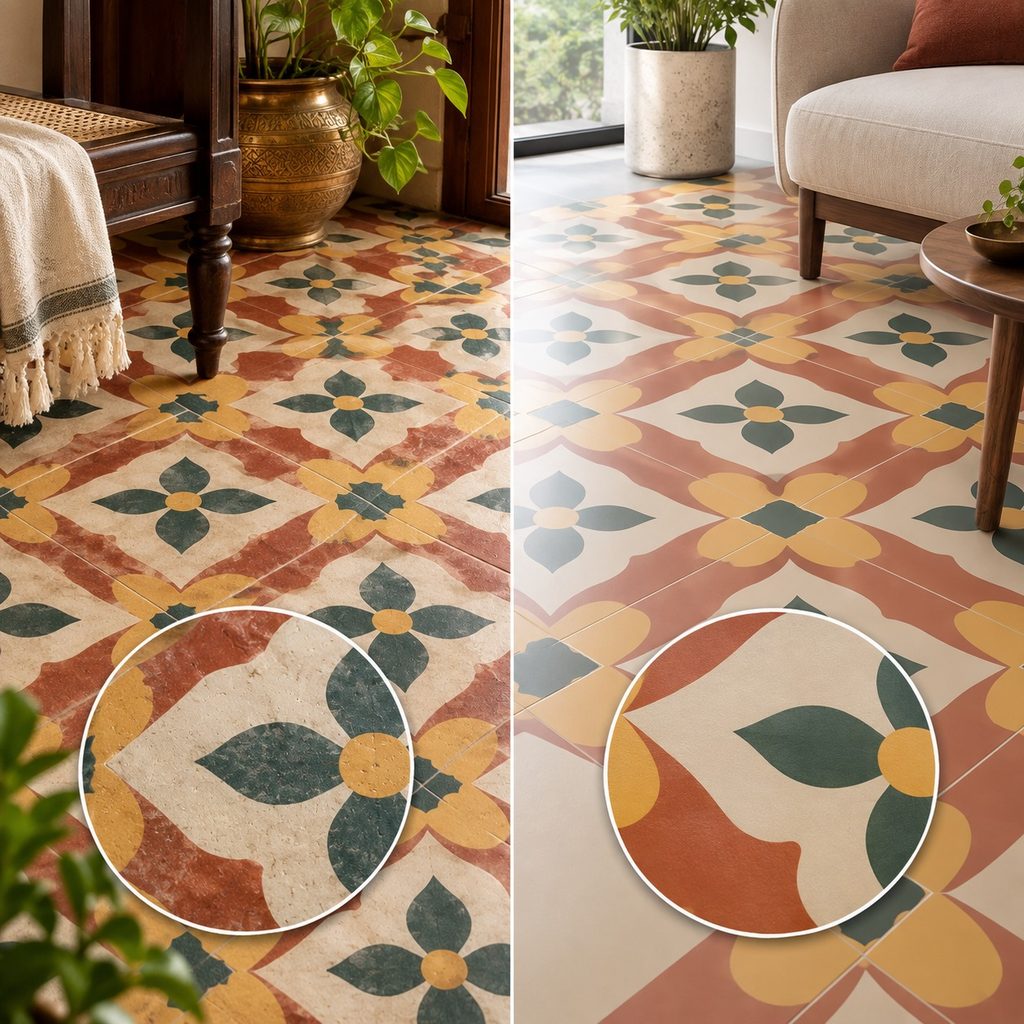
Handcrafted Athangudi tiles fit well in cases where the flooring material needs to provide a strong visual statement for an interior space. Their traditional patterns, color combinations, and handcrafted nature fit well into Chettinad-inspired houses, heritage buildings, courtyards, and character-led interiors. On the other hand, vitrified matt finish tiles provide a different design language. They are available in surfaces inspired by stone, concrete, cement, wood, and many other materials. Thus, they become suitable for modern, minimalistic, industrial, and contemporary Indian designs. The choice will depend on the fact if the project requires handcrafted decorative quality or a controlled architectural look.
5. Dimensional Consistency and Layout Planning
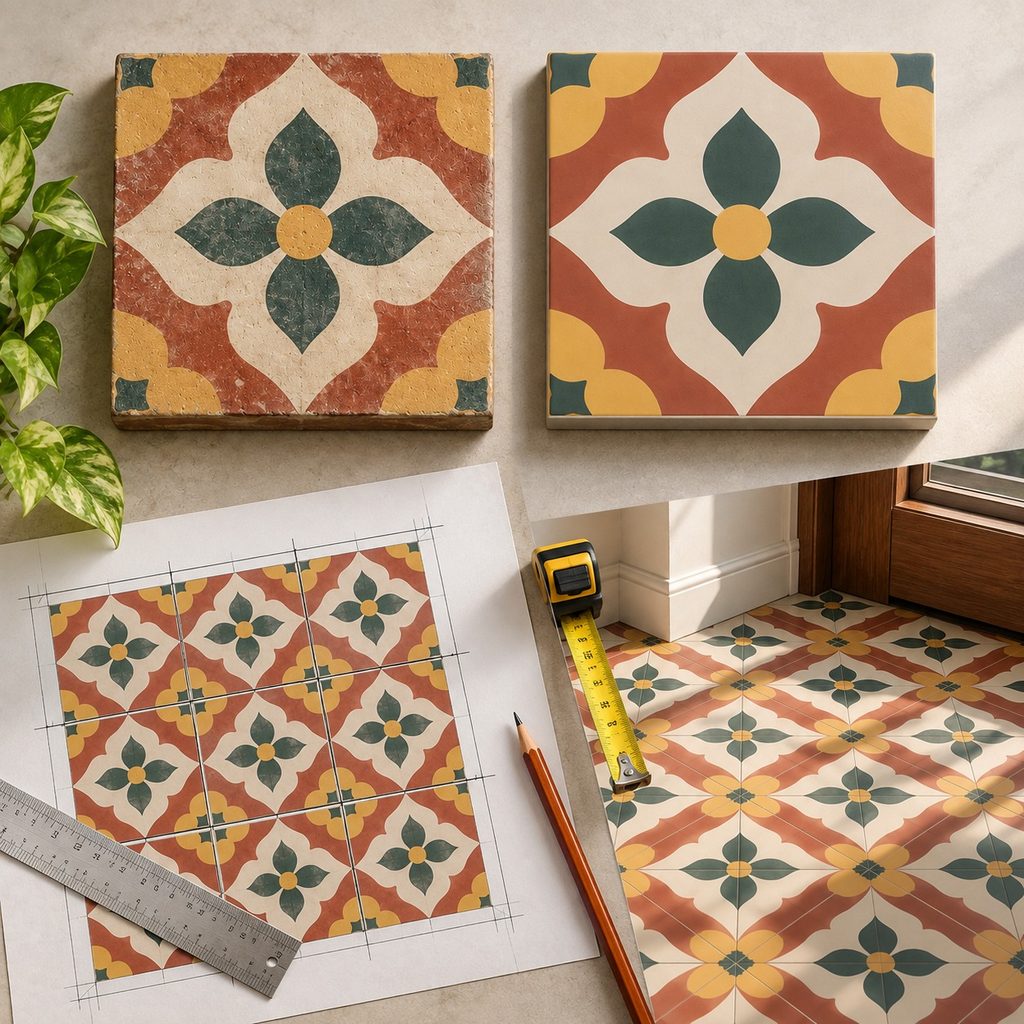
Dimensional consistency becomes important when professionals plan large floor areas, narrow joints, or highly aligned layouts. The process of making handmade tiles naturally results in certain variability since each piece gets produced through a manual process. Variability forms the character of Athangudi flooring, but it needs to be considered during the installation process. The process of manufacturing vitrified tiles takes place under control, providing better predictability of size and alignment. Rectified vitrified tiles offer a further level of control in case of the joints and visual continuity of lines.
6. Installation Considerations
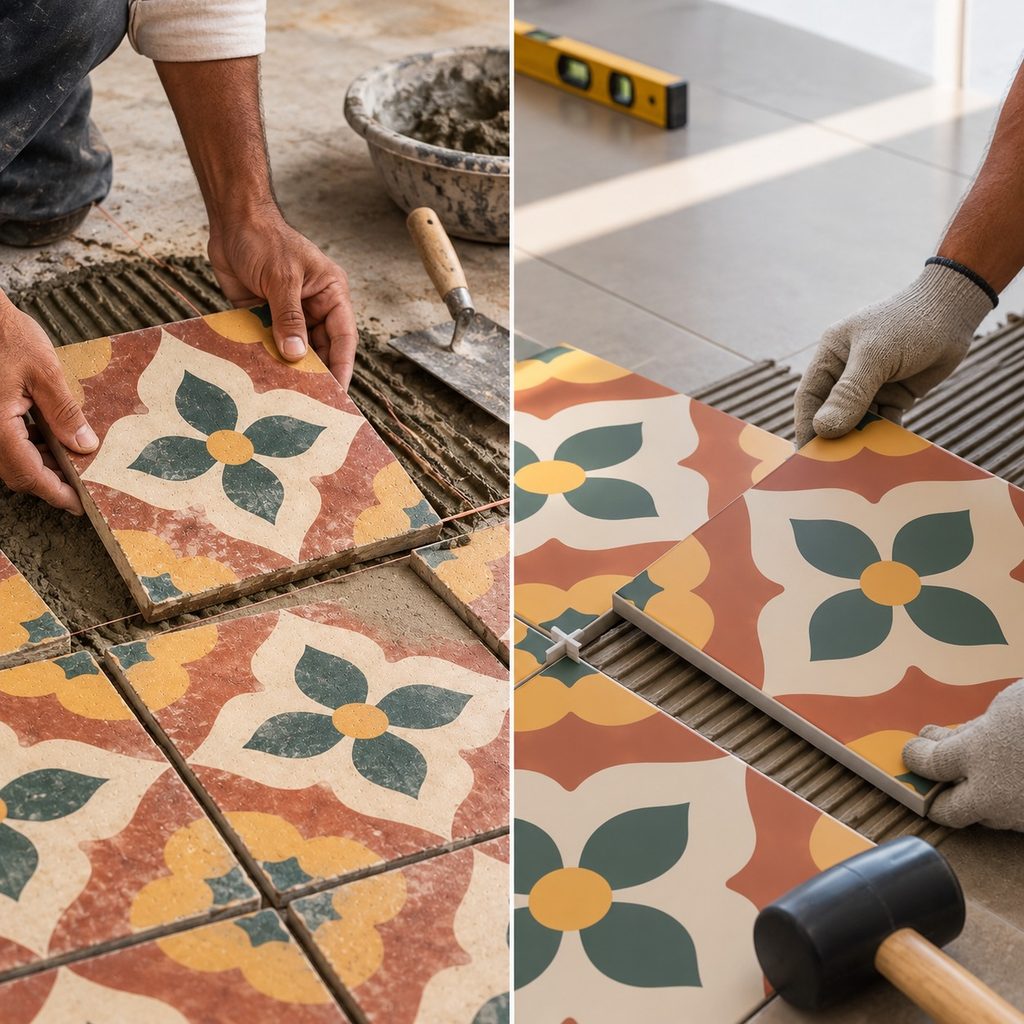
Both tile types will rely heavily on correct installation in order to achieve final performance. The installation process for Athangudi tiles requires professionals who know the characteristics of cement-based handcrafted flooring and can execute the installation and curing process as per manufacturer recommendations. The installation process for vitrified matt finish tiles requires substrate preparation, adhesive selection, tile alignment, joint planning, and grouting. Architects and contractors must follow the manufacturer’s recommendations regarding installation of the chosen product.
7. Maintenance and Regular Cleaning
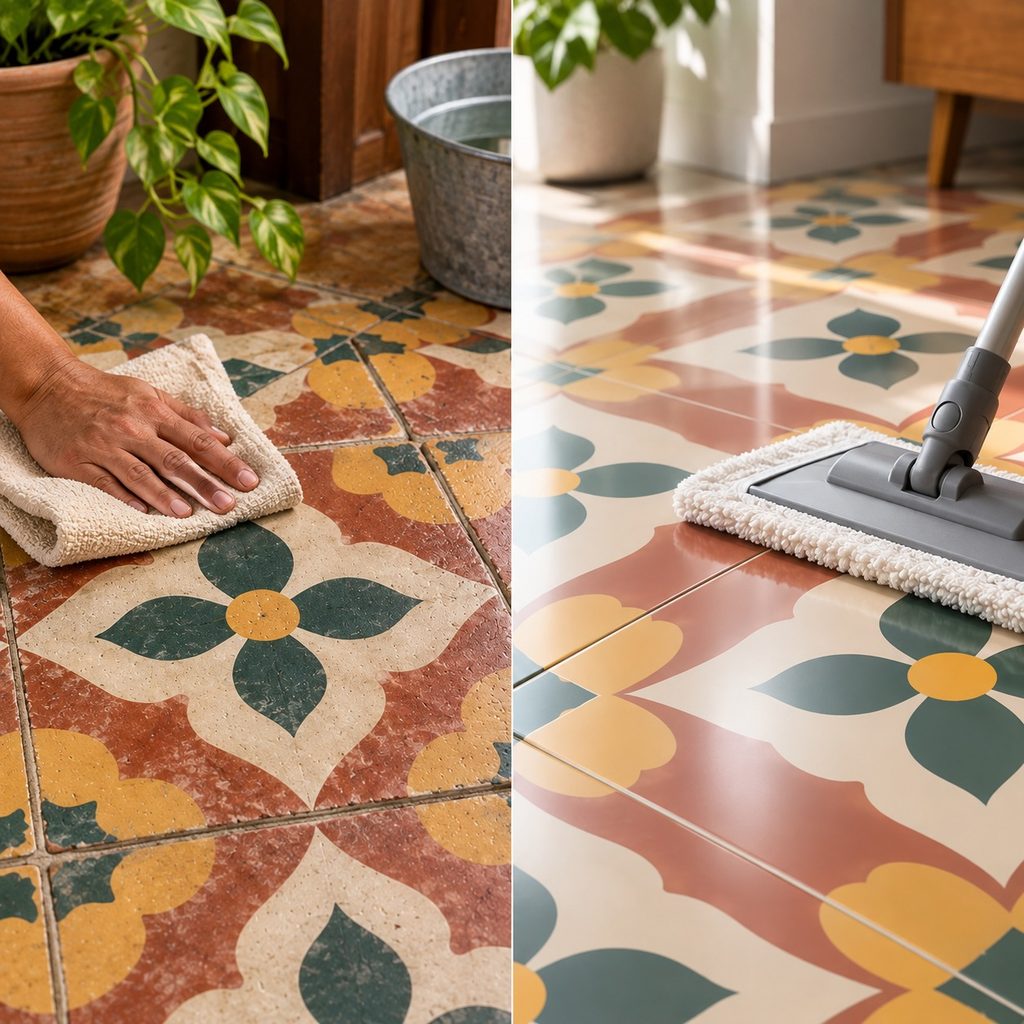
Each material requires specific maintenance due to its composition, surface treatment, installation, and application. Athangudi tiles require maintenance related to their composition and the need to protect from staining, sealing, and cleaning if necessary. Vitrified matt finish tiles provide easy-to-clean surfaces thanks to their dense surface. However, grout lines still require regular maintenance. It is essential that professionals assess the client’s cleaning routine, expected foot traffic, and exposure to liquids prior to choosing the material.
8. Water Absorption and Moisture Exposure
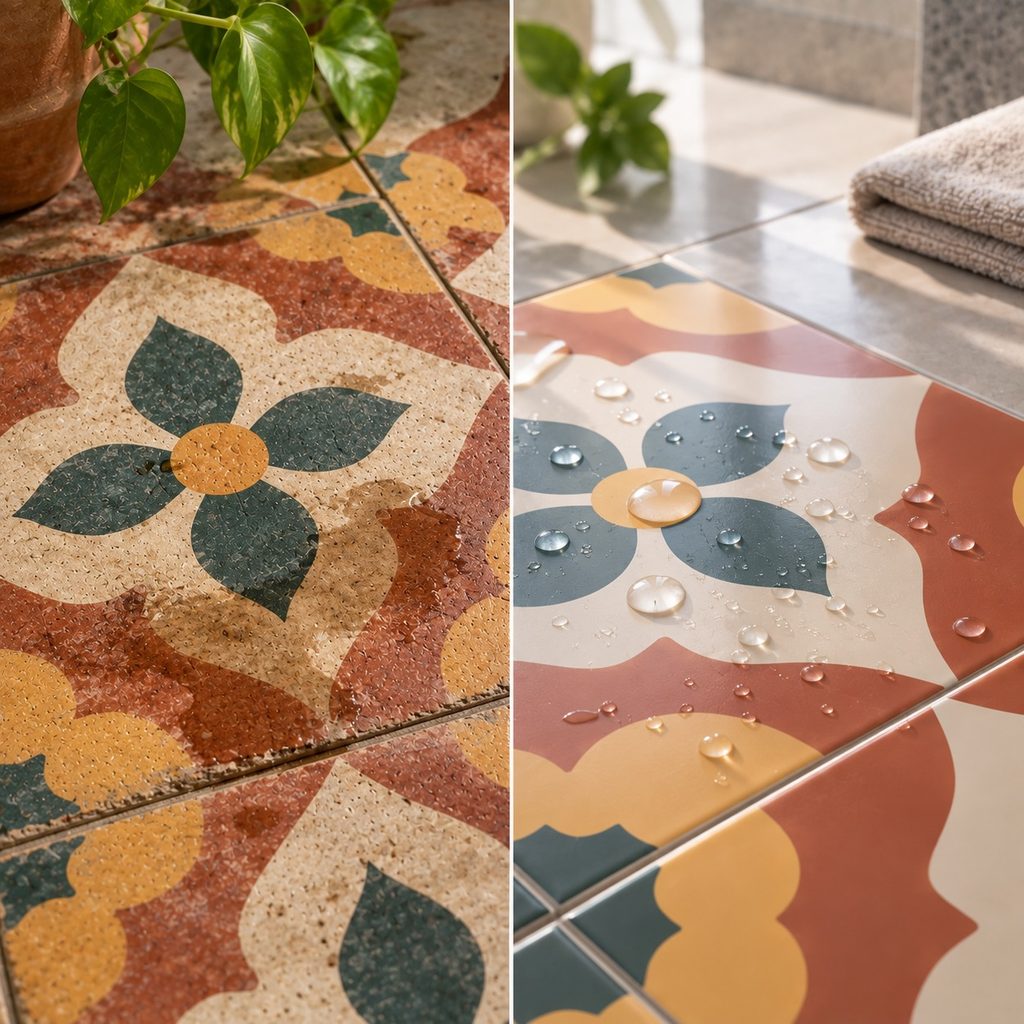
Water absorption is an important technical property of ceramic and vitrified tiles. Information about water absorption of vitrified tiles gives professionals measurable data to compare products based on standards. Athangudi tiles are made of cement-based material, so special attention needs to be paid to their performance. Professionals need to consult technical information about products to make sure that a tile is suitable for a kitchen, bathroom, or other moisture-exposed space.
9. Durability and Traffic
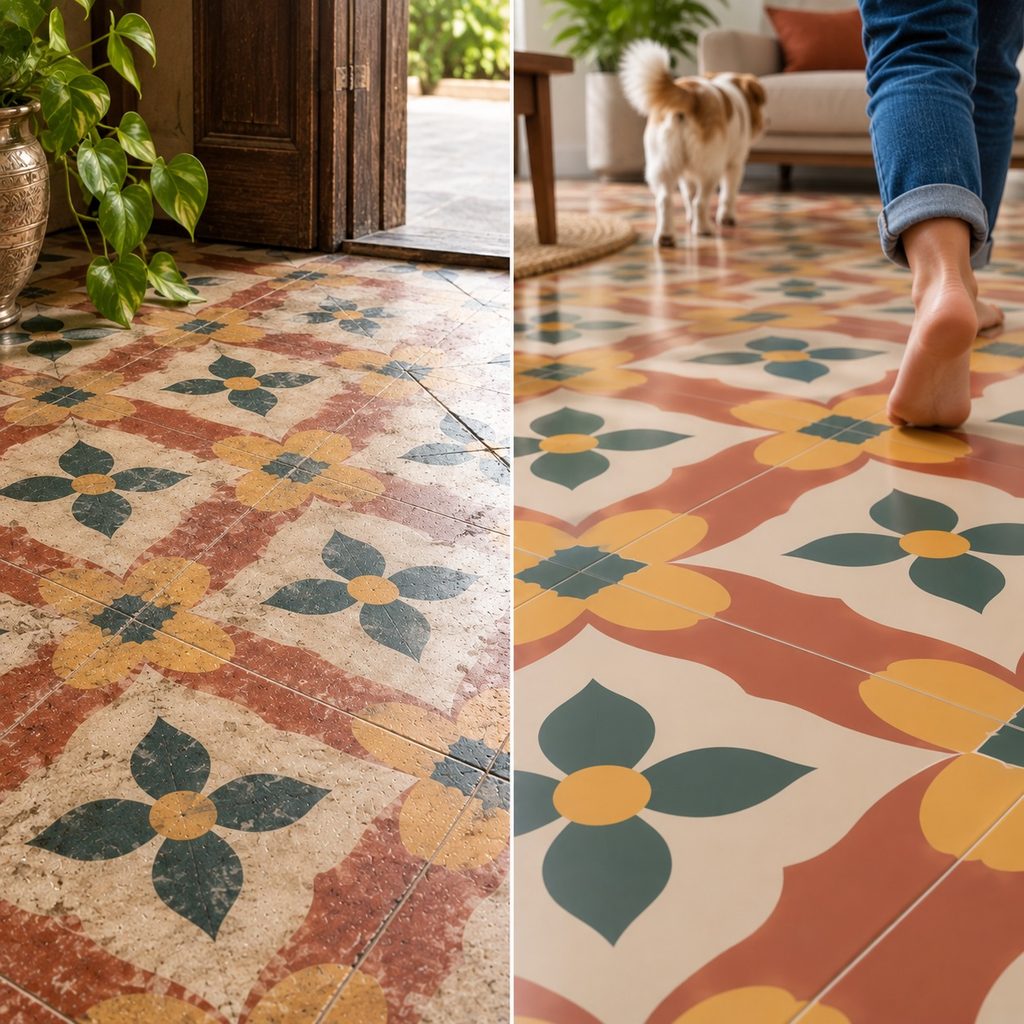
The amount of expected traffic influences flooring selection. The private bedroom, residential living room, hotel lobby, and commercial corridor have different demands in flooring. Athangudi tiles fit projects where handcrafted appearance and material characteristics play an important role in the design. Various vitrified matt finish tiles provide various technical specifications. Instead of choosing a product according to category, professionals need to consult the information from the manufacturer
10. Athangudi Tiles for Heritage and Character-Based Interior
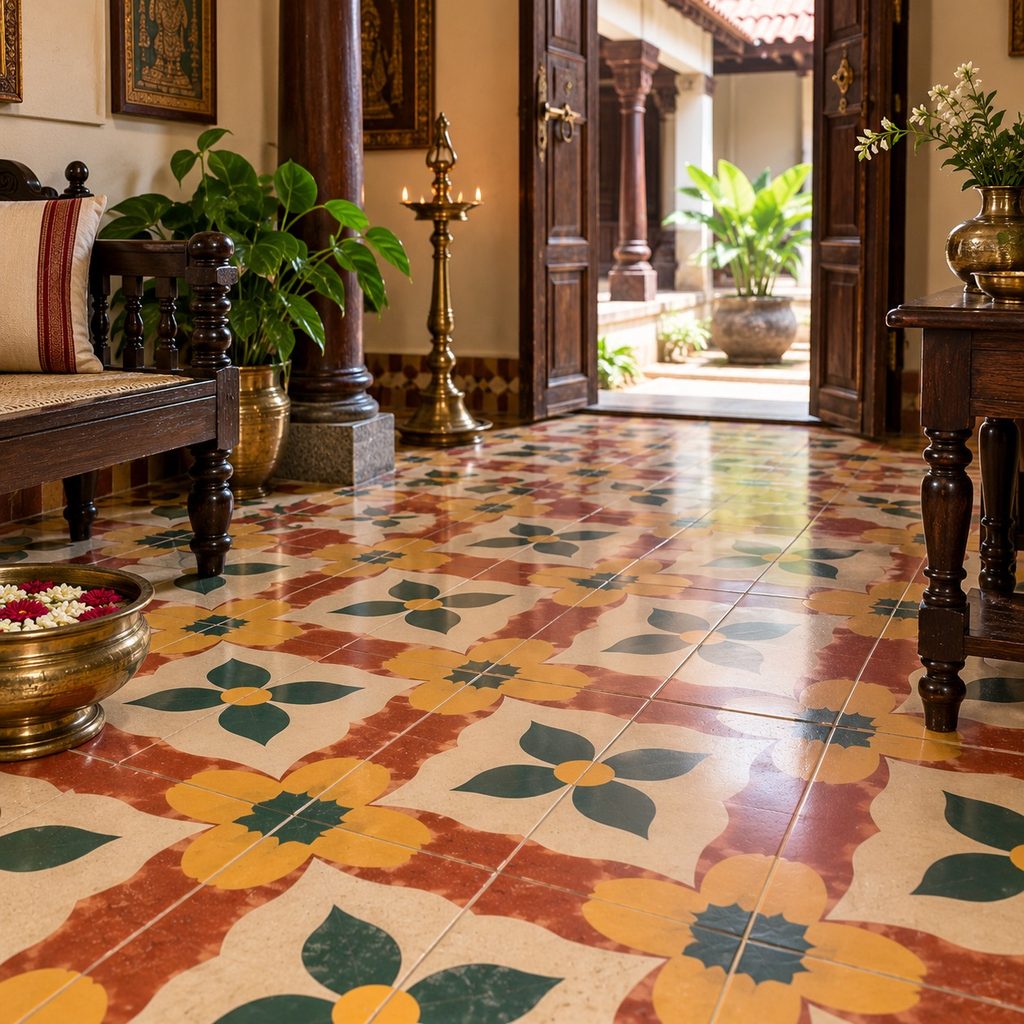
Athangudi tiles have a rich association with South Indian architectural traditions, specifically Chettinad architecture. Their designs and handcrafted nature fit in very well with courtyards, traditional buildings, heritage buildings, boutique hotels, and other interiors that draw inspiration from culture and region. A designer looking for a flooring material that could convey the essence of regional craftsmanship will find Athangudi tiles ideal.
11. Vitrified Matt Finish Tiles for Contemporary Interiors
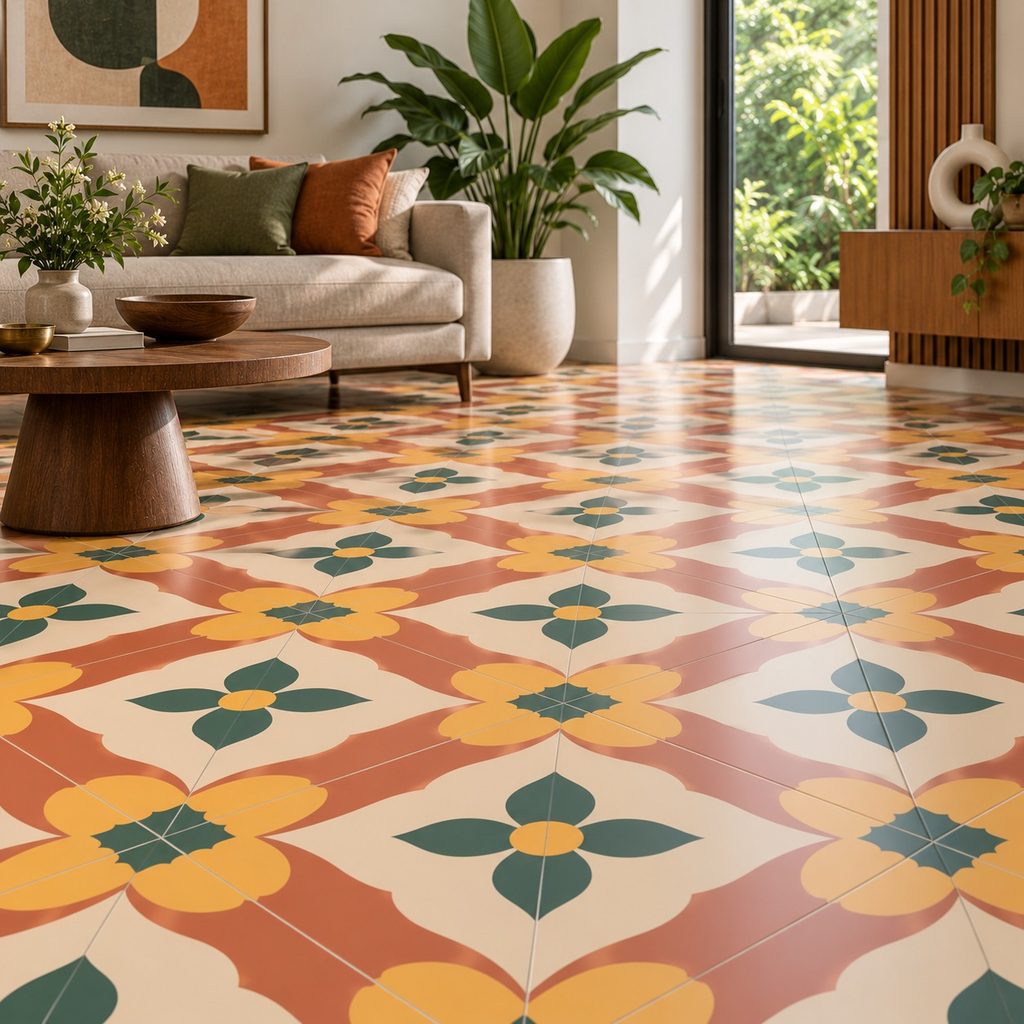
The contemporary nature of vitrified matt finish tiles makes them appropriate for those interiors that would have designers using clean surfaces, precise layouts, and contemporary material expressions. Matt finish lowers the reflectivity of the flooring surface compared to that of polished surfaces and thus works well with contemporary furniture and materials, neutral colors, and minimalist architecture. Other surfaces like stone, concrete, and the like further give designers room for combining flooring materials with walls, furniture, and other architectural elements.
12. Cost: Don’t Just Focus On Tile Price
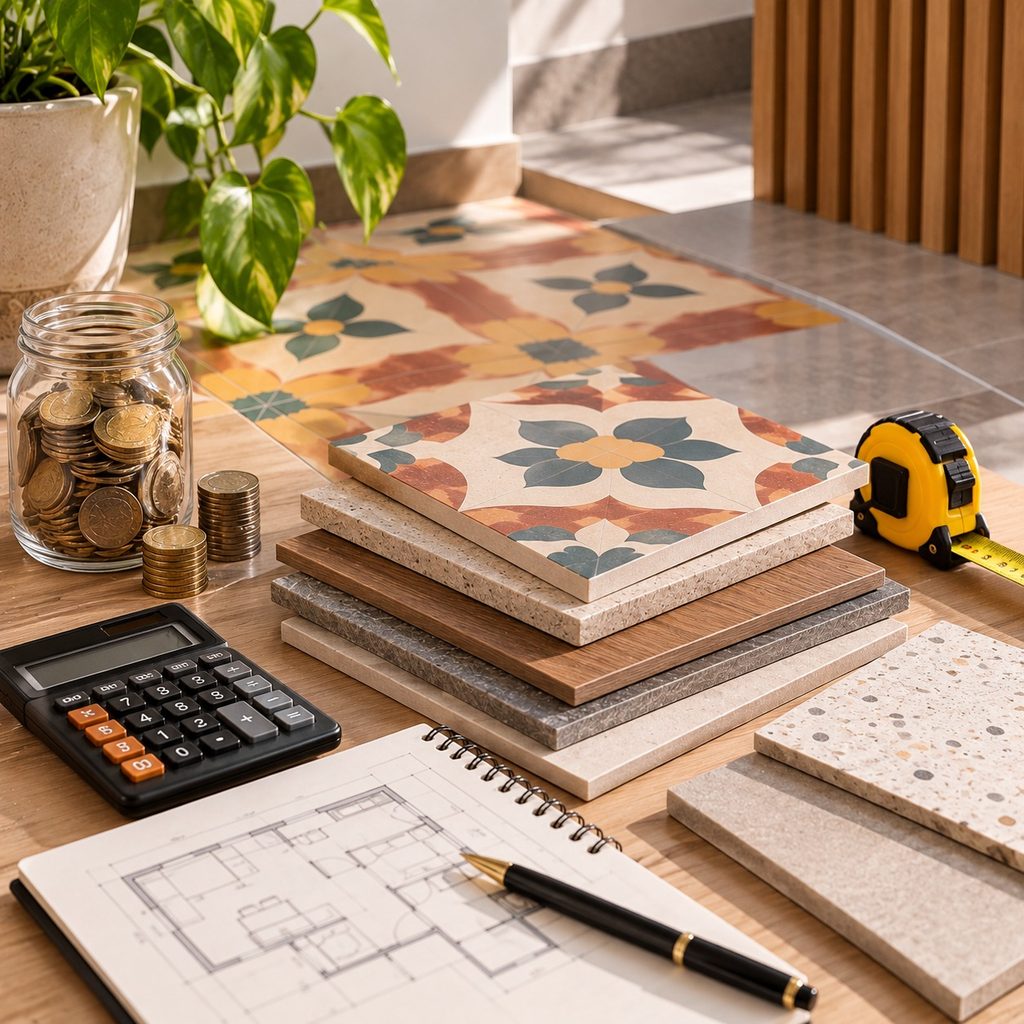
A comparison between Athangudi tiles and vitrified tiles based solely on the cost of buying the tiles will be incomplete. The cost of laying the flooring material covers the material, wastage, transportation, installation, adhesive or mortar, grouting, sealing or finishing, and future maintenance. For handmade tiles, future matching requirements need to be considered too if you require extra pieces at some point. For vitrified tiles, it is important to consider factors like size, finish, collection, grade, and technical specification in preparation of a budget.
13. Replacement and Future Maintenance Requirements
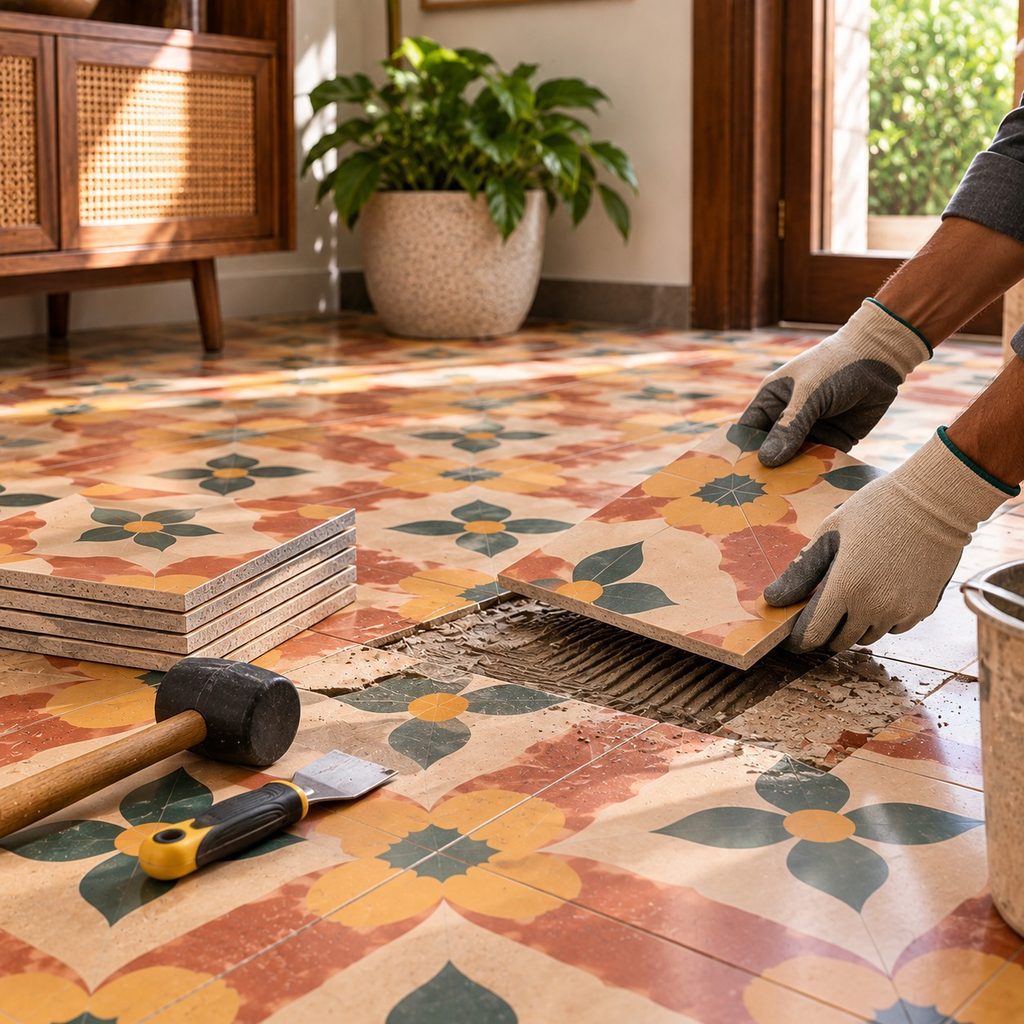
Future replacement is an important factor that needs to be considered at the time of planning. As Athangudi tiles have handmade variations, visual matching in future years will require advance planning. In the case of vitrified tiles too, product identification becomes important owing to factors like shade, calibre, and production batch numbers. A good strategy in both cases will be to keep extra tiles from the original installation, especially in large residential, hospitality, and commercial projects.
14. Sustainability and Material Selection
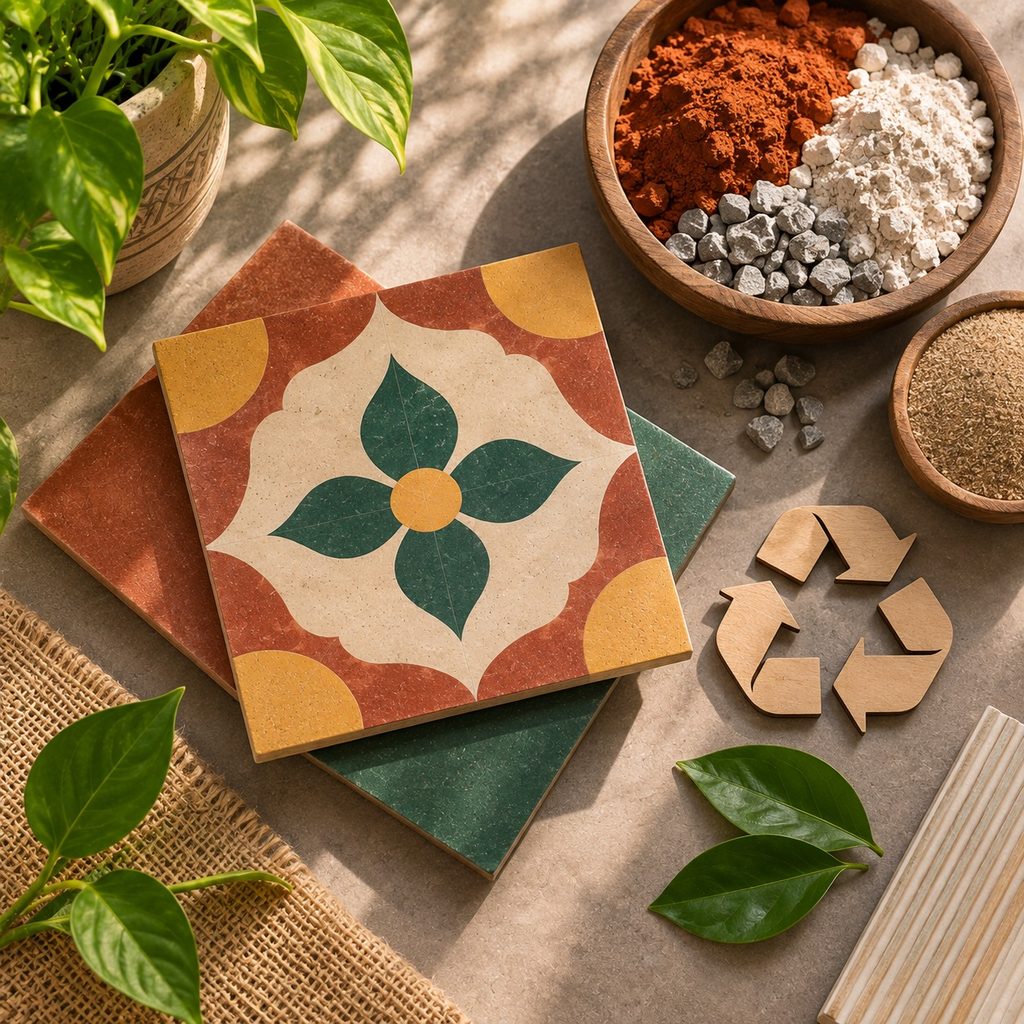
Sustainability is not merely about selecting a material on the grounds of being traditional or modern. Athangudi tiles are produced through traditional handmade processes and have significant regional craft value. Vitrified tiles are manufactured using industrial processes and can provide controlled dimensions and durability for long-term usage if specified and installed appropriately. A sustainability assessment done by professionals should take into account manufacturing, transportation, installation, maintenance, service life, and replacement requirements.
15. Athangudi Tiles vs Vitrified Matt Finish Tiles: What to Compare?
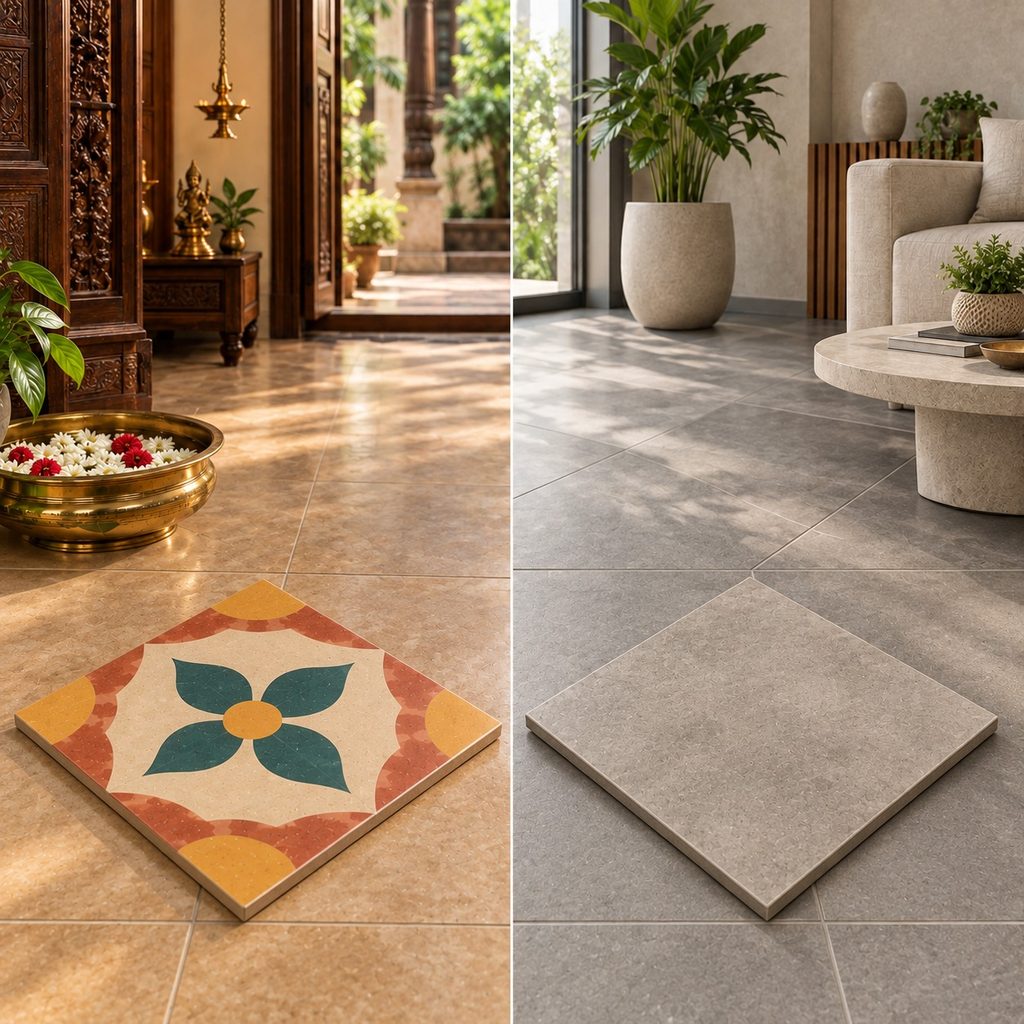
Professionals need to compare both types of tiles from a few different aspects before making the final decision. These aspects include design intentions, applications, traffic and water resistance, dimensional needs, installation process, maintenance, availability, replacement requirements, and performance. In this way, one can make a project-based decision without generalizing that traditional or modern flooring is better.
16. What Architects Must Consider before Deciding on a Floor Material
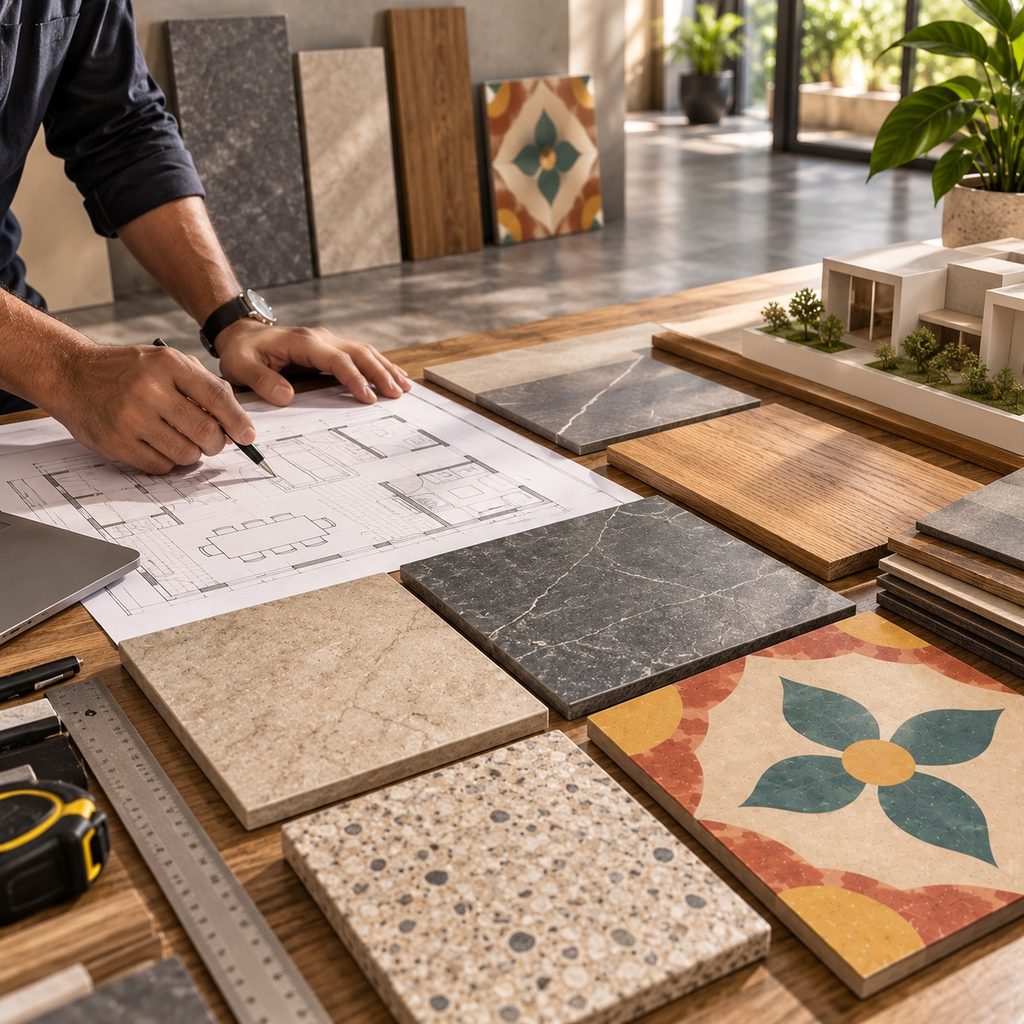
Before selecting Athangudi tiles and vitrified matt finish tiles, it is imperative to verify the application, anticipated foot traffic, moisture presence, tile size, joint width, substrate type, and installation process. It is essential to evaluate the water absorption rate, breaking strength, abrasion, staining, and chemical resistance of the material as per the situation. Color and dimensional variability must also be specified for the handmade tiles. Batch number, calibre, and technical classification must be specified for vitrified tiles.
17. Athangudi Tiles or Vitrified Matt Finish Tiles—How to Decide?
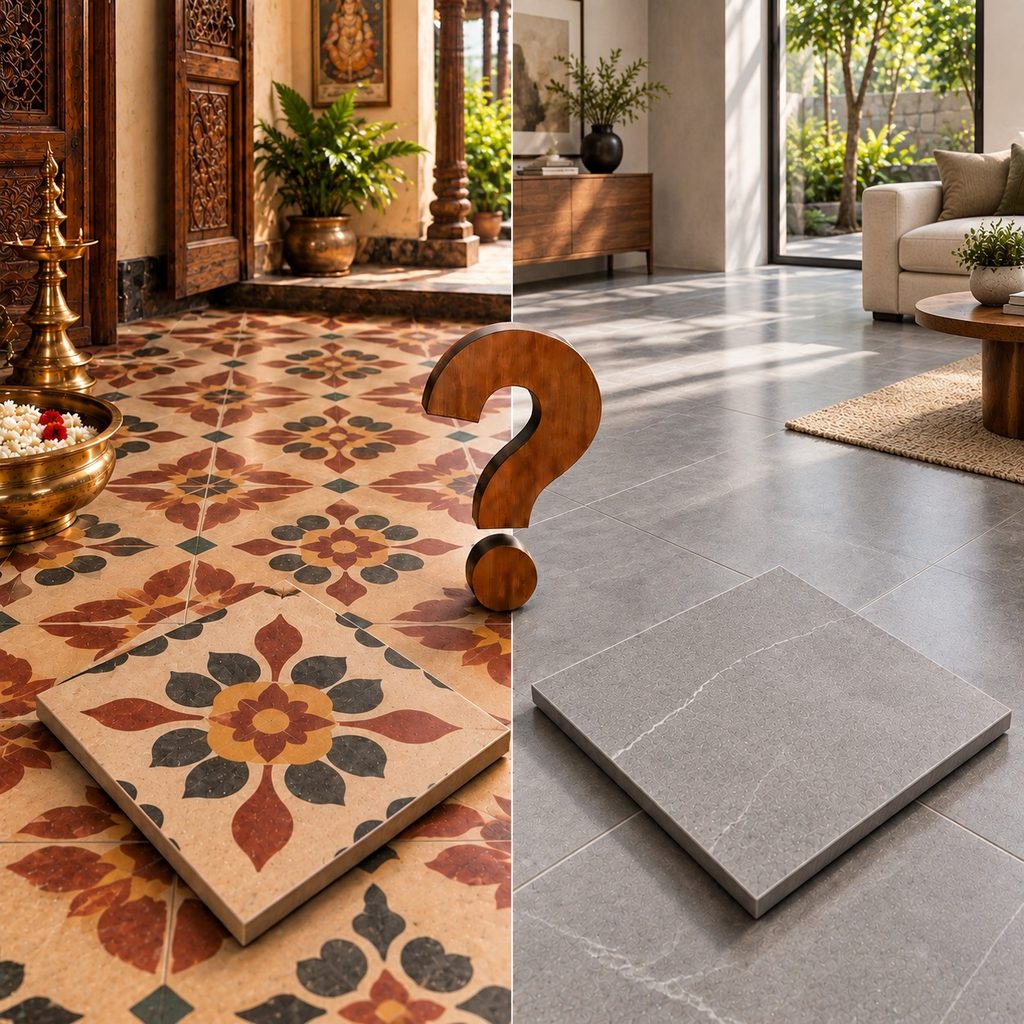
If handmade tiles with individual material character are required for an architectural project, then one must choose Athangudi tiles, as they allow the introduction of individual design elements into an interior scheme. If contemporary appearance, variety, and technical specifications become more important than regional identity and individual material character, then vitrified matt finish tiles must be considered. In any case, the selection should be based on design requirements of the project.
18. Why Matt Finish Vitrified Tiles Continue to Appeal to Modern Designers
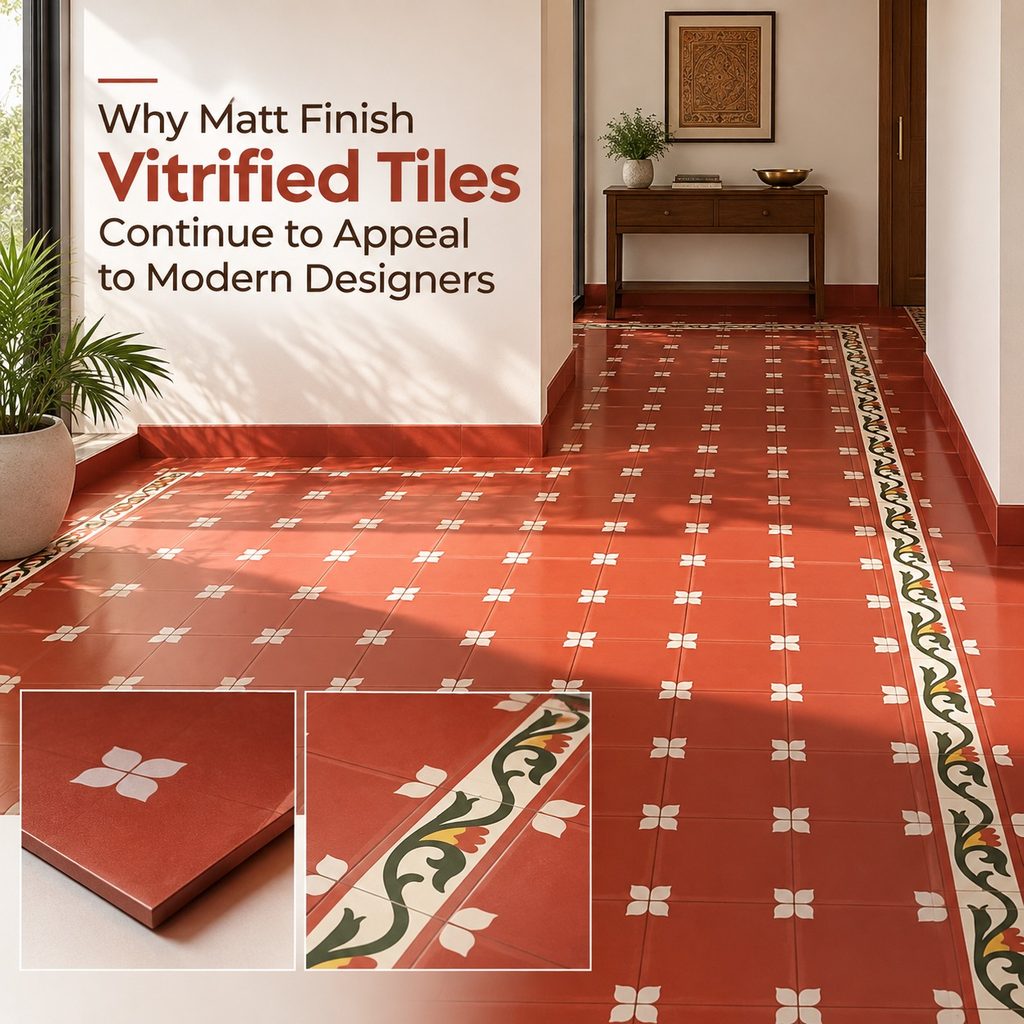
With matt-finish vitrified tiles, architects and interior designers get access to modern surfaces but can keep all practical qualities of the traditional vitrified tile structure. Thanks to their variety in format, color, texture, and design interpretation, they can be used in residential, hospitality, retail, and commercial interiors. For modern Indian architecture, they can help develop matching floor and wall designs inspired by stone, concrete, and other natural materials.
19. Things to Look at When Specifying a Tile
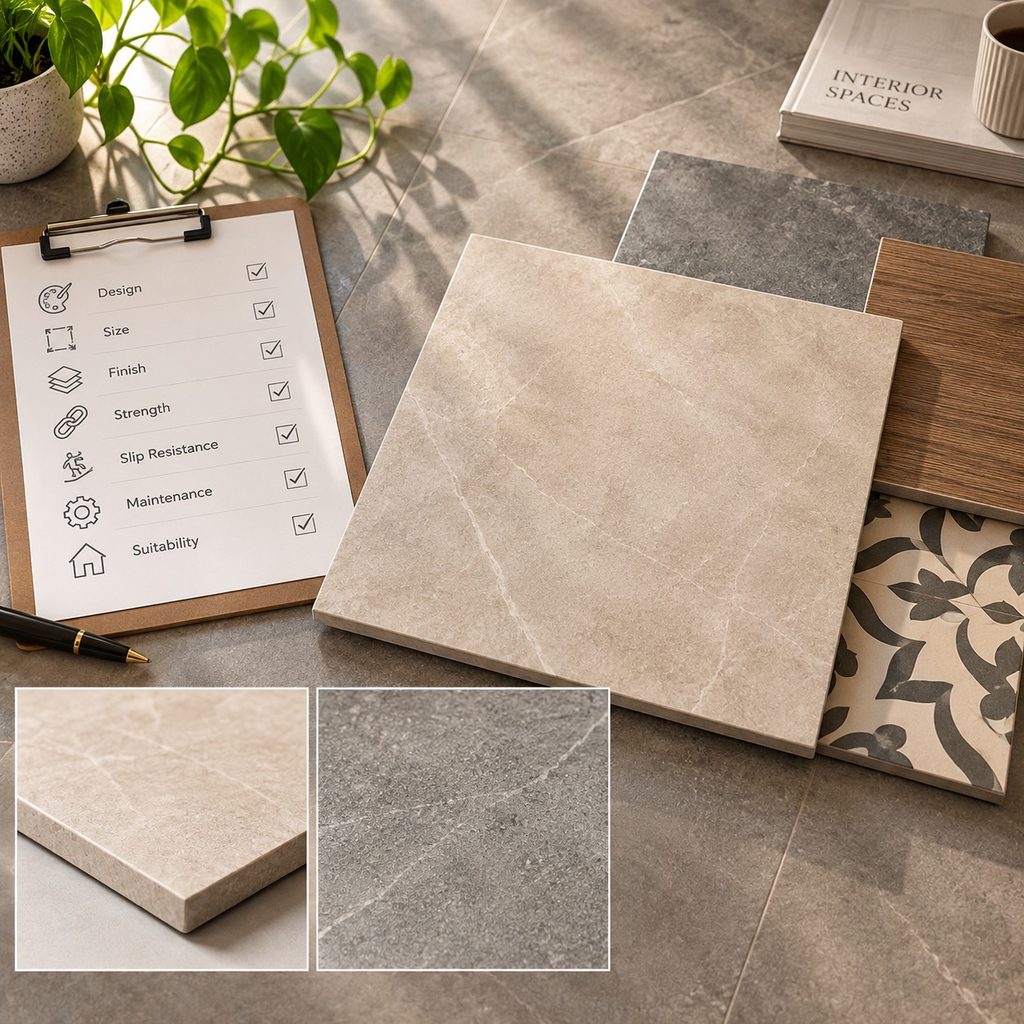
Before you approve any floor covering material, consider its purpose, design intention, tile size and format, surface finish, water absorption rate, mechanical properties, stain, chemical resistance, installation conditions, joint detailing, and maintenance needs. Make sure that the manufacturer’s specifications for the specific tile will provide the relevant information. Do not forget about possible wastages, and reserve some extra tiles for repairs. Such comprehensive specification minimizes uncertainties in installation and maintenance.
20. Conclusion
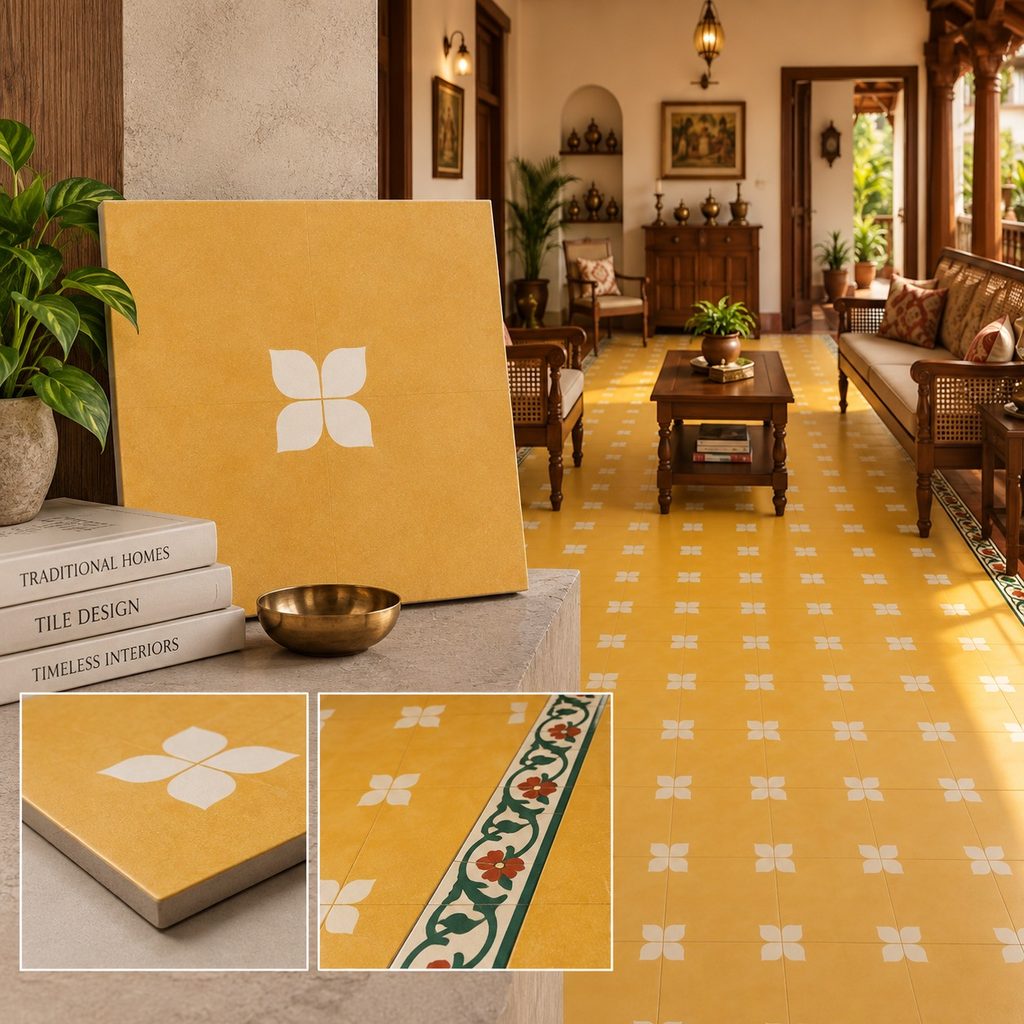
The Athangudi tiles and the vitrified matt finish tiles are different in nature, and each of the options has its own features and advantages. Athangudi tiles are traditional products made by hand and characterized by unique patterns and the unique nature of the materials, while the vitrified matt finish tiles have definite specifications.
Architects, interior designers, and builders have to consider various issues, including the function of the space, traffic level, humidity, maintenance, and life cycle. This review of the technical specifications will help you choose a suitable tile for your project.
Looking for authentic Athangudi tiles or vitrified matt finish tiles?
Explore the range of the tiles at Regal Ceramica and choose a product that can fit your design ideas and needs of the space.
Explore the range of the tiles at Regal Ceramica and choose a suitable product.